Patterns & clues4 min read
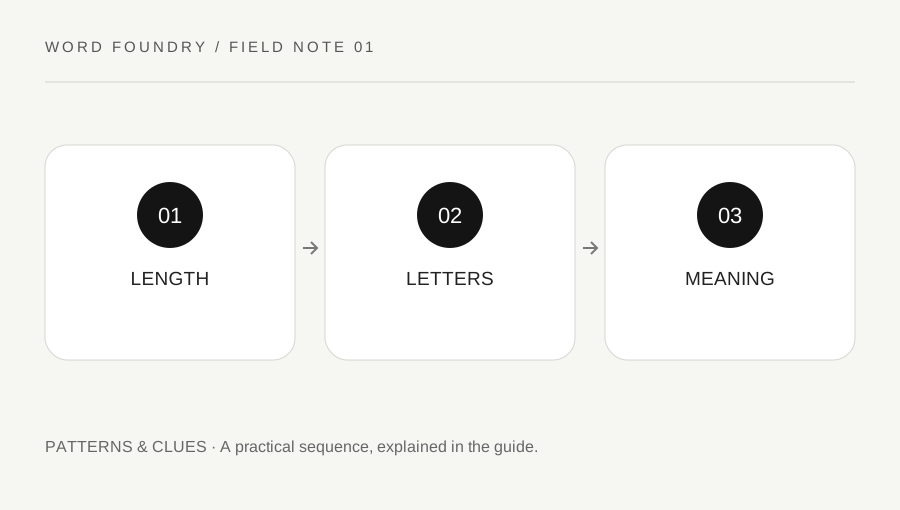
A pattern narrows the spelling possibilities. The clue decides which possibility fits the intended meaning. Keep those two checks separate, and use a helper to test candidates rather than to replace the reasoning that makes a puzzle satisfying.
Read the complete guide ↗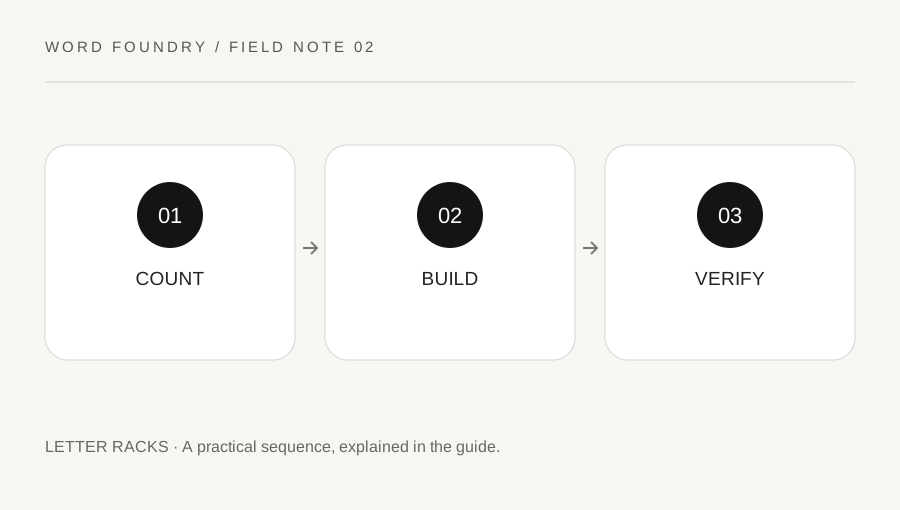
Letter racks4 min read
A letter rack describes how many copies of each letter are available. A word can use a letter twice only when the rack supplies both copies or a wildcard can replace the missing copy. Frequency counts prevent many misleading suggestions.
Read the complete guide ↗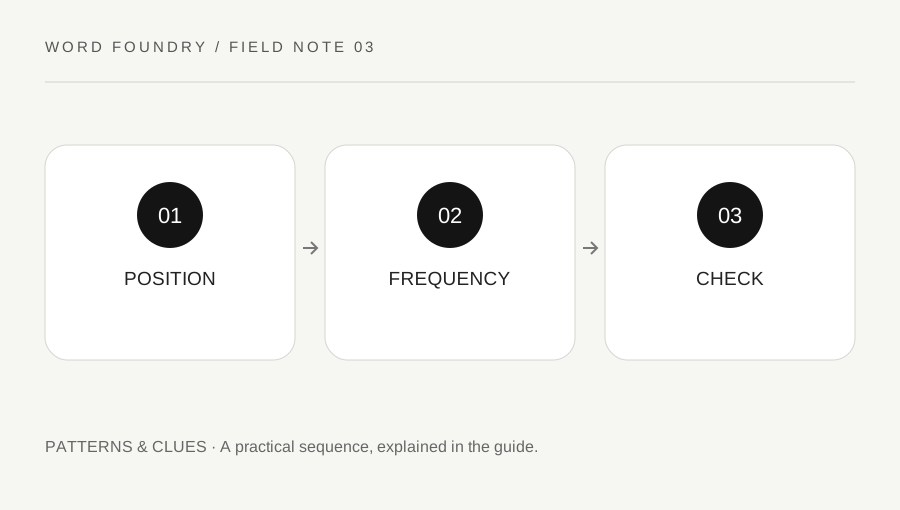
Patterns & clues3 min read
Repeated letters introduce two kinds of information: how many copies occur and where those copies sit. A reliable solving method tracks both. Recognizing a familiar spelling shape helps, but it should not override the actual constraints of the exercise.
Read the complete guide ↗
Original practice4 min read
A short practice session works best when it has a clear task and a useful review. Our daily anagram supplies an original clue and a small set of letters. You can solve it unaided, ask for help or reveal it, then study one feature.
Read the complete guide ↗
Vocabulary habits4 min read
Recognizing a familiar ending can help you form candidates, but attaching an ending does not automatically create an accepted word. Use word families to organize practice, then check spelling, meaning and the rules of the particular exercise.
Read the complete guide ↗
Original practice4 min read
Making a small puzzle is a useful way to understand solving. Choose an answer, write a fresh clue and check that the supplied letters and meaning support it. A fair exercise gives enough information without depending on a private association.
Read the complete guide ↗
Letter racks4 min read
A rack search can return short words made from some of the supplied letters. A full anagram must use every supplied copy. Both tasks are useful, but they need different checks. Decide which one your exercise requires before interpreting the results.
Read the complete guide ↗
Patterns & clues4 min read
Length, starting letters and ending letters narrow a candidate set together. They do not donate letters to a rack. A clear filtering sequence helps you understand why a word remains or disappears without repeatedly changing the whole input.
Read the complete guide ↗
Patterns & clues4 min read
An empty result can come from an input conflict or a limited vocabulary. It is not an exhaustive verdict on English. Use a short diagnostic sequence to distinguish a misplaced letter, a count shortage and a missing practice-list entry.
Read the complete guide ↗
Letter racks4 min read
Separating a rack into familiar vowel letters and the remaining letters can make its inventory easier to scan. It is a candidate-building aid, not a guarantee about word structure. Keep exact counts and verify each trial against the actual letters.
Read the complete guide ↗
Original practice4 min read
A word palindrome reads the same in both directions under the chosen comparison rule. You can verify it by checking paired positions from the outside inward. State how you treat case, spaces and punctuation before applying the same idea to a phrase.
Read the complete guide ↗
Original practice4 min read
A simple word ladder changes one letter at a time while keeping the same length and using a verified word at each step. A clear path explains every transition. It does not need to claim the shortest possible solution to be a useful practice exercise.
Read the complete guide ↗
Vocabulary habits3 min read
Related expressions can appear as one word, separate words or hyphenated forms. A puzzle may represent those characters differently from a dictionary entry. Verify the written form and the puzzle’s convention before stripping spaces or counting answer positions.
Read the complete guide ↗
Vocabulary habits4 min read
A familiar sound can point toward more than one spelling. When a clue involves a sound-alike relationship, keep pronunciation, meaning and letter positions as separate checks. Accent differences and puzzle conventions can also affect whether the intended relationship feels clear.
Read the complete guide ↗
Vocabulary habits4 min read
A spelling variant can change a word’s length and fixed positions without changing the intended broad meaning. Check the puzzle’s convention and a reliable dictionary before calling one form a typo. Do not manufacture variants by applying a pattern blindly.
Read the complete guide ↗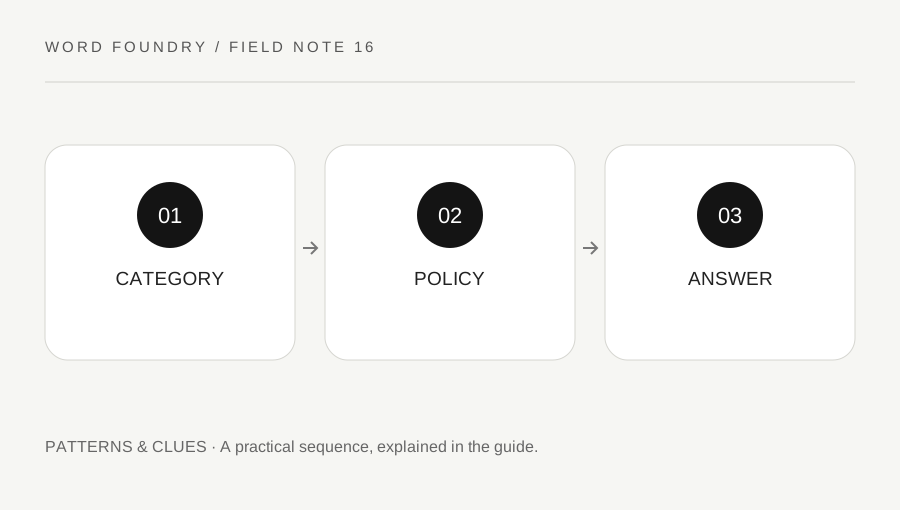
Patterns & clues3 min read
A sequence can be a familiar name or abbreviation without being allowed in a particular word exercise. Acceptance is a rule question. Identify the category and the puzzle’s policy before treating a plausible pattern match as a permitted answer.
Read the complete guide ↗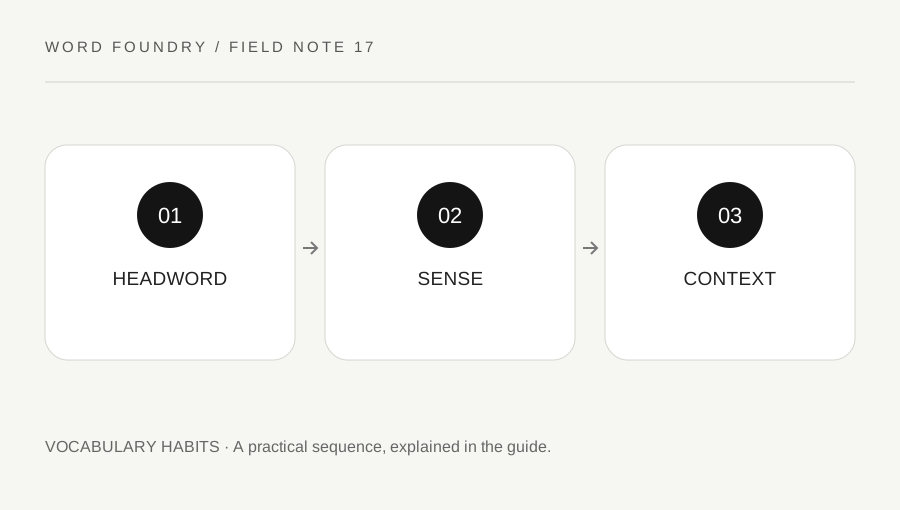
Vocabulary habits4 min read
Finding a spelling in a dictionary is only the first step. The intended meaning, part of speech, usage label and form must fit the clue or sentence. A careful entry check prevents a familiar headword from lending false confidence to the wrong sense.
Read the complete guide ↗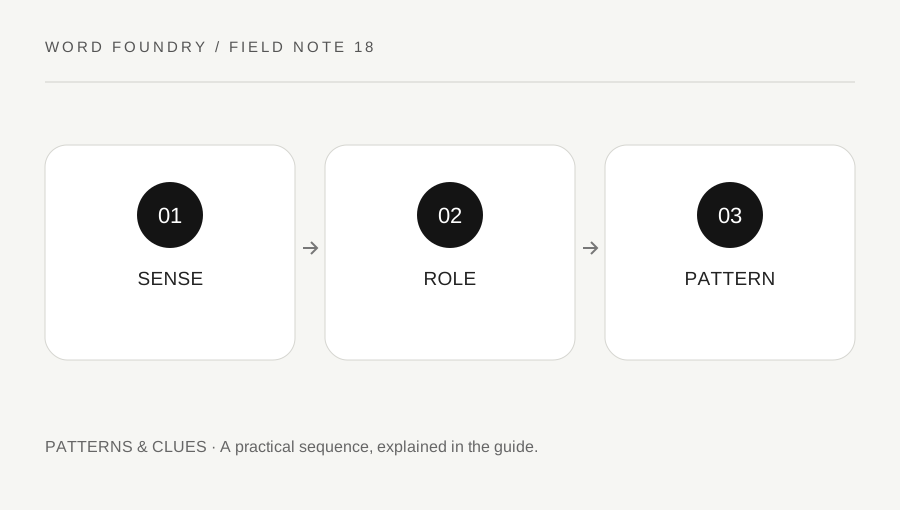
Patterns & clues3 min read
Related words are useful candidates, but they are not interchangeable in every sentence. A clue can depend on a specific sense, grammatical role or tone. Use a thesaurus to explore possibilities, then test each candidate against the whole task.
Read the complete guide ↗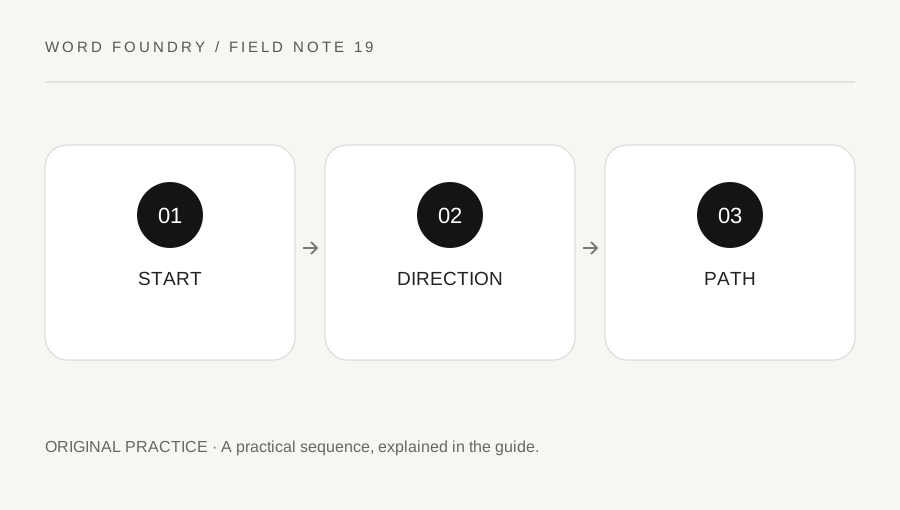
Original practice4 min read
A word search is a position task: each letter must follow the permitted direction through the grid. A systematic scan is easier to check than jumping randomly between familiar shapes. Use explicit coordinates and a short original grid to practice the method.
Read the complete guide ↗
Original practice3 min read
An odd-one-out task is fair when the grouping rule can be explained and reasonable alternatives are considered. Familiar words can belong to several categories at once. Write the intended rule and test it before deciding that one answer is uniquely correct.
Read the complete guide ↗