A Short Daily Anagram Routine That Teaches More Than the Answer
A short practice session works best when it has a clear task and a useful review. Our daily anagram supplies an original clue and a small set of letters. You can solve it unaided, ask for help or reveal it, then study one feature.
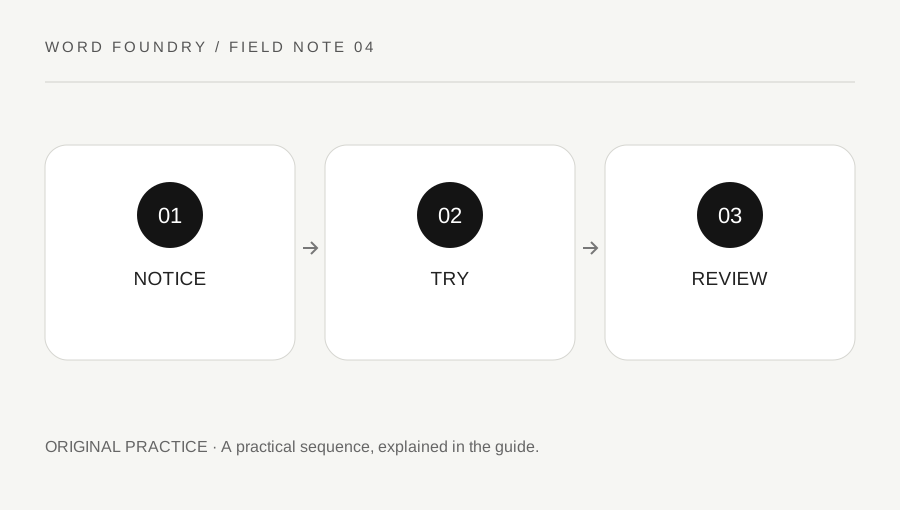
Original explanatory diagram. Numerical examples in this guide illustrate the reasoning; they are not a claim of hands-on testing.
Set the rules before starting
Read the clue and count the supplied letters. In this exercise the answer uses every letter exactly once, including repeated copies. The clue is written for the selected answer; it is not a copied publisher clue or a claim that only one English anagram exists. An alternative word may use the same letters while failing the clue.
The daily item is selected deterministically from our small original exercise bank using the UTC date. It does not track a commercial puzzle's schedule. Someone in another local date may see the same UTC-day item, and resetting the input does not secretly advance to another puzzle.
Inspect the inventory before rearranging
Write repeated letters together and separate vowels from consonants in your own notes. Look for a plausible ending or beginning, but keep it provisional. A familiar cluster is a candidate-building aid, not evidence that the answer must use that cluster. Check any trial word against the full letter inventory.
For example, a six-letter set for GARDEN can suggest several starting arrangements. The original clue about a place where plants are grown narrows the meaning. If a trial uses a letter twice that appears only once, reject it immediately rather than trying to make its meaning fit.
Use help in measured stages
Try a short unaided attempt first, then choose a single form of help. Our exercise offers the first letter and a reveal option. If you use the first-letter hint, return to the remaining inventory instead of repeatedly guessing complete words. A revealed answer can still support learning if you inspect how its letters satisfy the task.
Avoid measuring success only by speed. Taking longer to verify a repeated letter can teach more than a lucky immediate guess. You can also use the rack helper with the exact answer length, while remembering that its limited vocabulary may omit alternative words. The clue remains part of the task.
Review one concrete feature
After solving, choose one useful observation: a repeated letter, a consonant pair, a familiar ending or a meaning you initially overlooked. Write an original sentence using the answer and check any uncertain usage in a dictionary. A short accurate note is easier to revisit than a page of copied definitions.
Then make a new scramble of the same letters yourself. Explain to another person why the answer uses every supplied copy. This turns the exercise into a small reasoning task rather than answer collection. Do not copy a commercial clue into your own published practice set; create a fresh clue and verify that it points clearly to your chosen word.
Keep expectations modest and repeatable
The exercise bank is small and will repeat. It is designed as an accessible practice feature, not a comprehensive language course or a medically validated memory intervention. If you want broader vocabulary development, read varied material, check unfamiliar words in context and use them in your own writing.
The tool keeps no streak account and sends no answer submissions to a server. A reset clears the current attempt and message, leaving the same day's item in place. You can stop after one careful review. A consistent routine based on accurate letters, clear meaning and a brief explanation offers a useful foundation for independent puzzle practice.
A practical checklist
Tick items for your own use. This checklist is saved only in this browser.
Questions that come up
Why is the same puzzle still here after reset?
Reset clears your attempt; it does not change the UTC-day selection. This keeps the daily exercise predictable. The small original bank repeats over time and is described as practice rather than an unlimited puzzle feed.
Can another anagram be valid?
Yes, the same letters can form more than one word. The exercise checks its selected answer and original clue. A different anagram is an interesting observation, but it may not satisfy that clue.
Is my attempt saved or uploaded?
No. The exercise runs locally without an account or server submission. Reloading or resetting clears the attempt. The site does not maintain an online score or streak profile.
References & scope
Background references checked on 18 October 2026. The examples and practice exercises are original editorial explanations, not copied procedures or professional advice.
- Cambridge Dictionary: word formation
- Merriam-Webster: dictionary lookup
- Merriam-Webster: official game dictionary lookup
- Cambridge: compounds and written forms
- Cambridge: colour and color usage labels
- Merriam-Webster: homophone terminology
- Merriam-Webster: palindrome terminology
- Merriam-Webster: thesaurus sense grouping